The scrap metal shearing machine, often nicknamed the "tiger shear" for its powerful cutting jaws, is a cornerstone piece of equipment in the metal recycling and scrap processing industry. Its primary function is to use immense hydraulic force to cut, compress, and densify various forms of ferrous and non-ferrous scrap—such as demolition steel, vehicles, appliances, and industrial waste—into clean, manageable pieces ideal for steel mills and foundries. This process is fundamental for efficient recycling, transforming bulky, low-density scrap into a high-quality furnace-ready raw material.
At its core, a scrap metal shear operates on a simple yet powerful principle. The machine typically consists of a large feed box, a hold-down cylinder, and a massive moving blade (the "jaw") that works against a fixed blade. The process is highly systematic:
1. Loading: Loose scrap is loaded into the machine's feed box or chamber.
2. Compaction & Holding: A powerful hydraulic hold-down cylinder descends to compress and firmly secure the material. This is critical for safety, preventing material from shifting or "kicking back" during the cut.
3. Shearing: The main hydraulic cylinders then drive the moving blade (often in an upward or horizontal motion) with tremendous force—often measuring in hundreds or thousands of tons—to shear through the metal against the stationary blade, much like a pair of giant scissors.
4. Ejection: After the cut, the hold-down releases, and the sheared, densified "log" or bale is ejected, ready for transport.
Modern shears are controlled by Programmable Logic Controllers (PLCs), enabling semi-automatic or fully automatic cycling for continuous, efficient operation.
Main Types and Key Advantages
Shears are broadly categorized by their structure and optimal use case:
• Alligator Shear: Named for its scissor-like, hinged jaw movement reminiscent of an alligator's bite. It is more compact and cost-effective, ideal for smaller yards processing lighter scrap like rebar, sheet metal, and structural beams.
• Guillotine Shear (or Box Shear): Features a large box-like feed chamber and a blade that moves vertically (like a historical guillotine) or horizontally within a solid "gate" or frame. It excels at processing heavier, bulkier materials like entire car bodies, large industrial equipment, and thick plate due to its greater chamber size and holding force.
The advantages of using a shear are transformative for the recycling workflow:
• Volume Reduction: Sheared scrap can occupy up to 70% less space, drastically cutting storage and transportation costs.
• Improved Quality: Produces clean, dense "furnace-ready" bundles that melt more efficiently in electric arc or basic oxygen furnaces, reducing energy consumption and impurities.
• Enhanced Safety & Environment: Replaces dangerous and polluting methods like manual torch cutting with a contained, controlled process.
• Operational Efficiency: Enables high-volume processing with reduced labor and faster turnaround.
Operational Monitoring
1. Sound and Vibration:
Listen to the operating sound of the equipment. A normal hydraulic system produces a smooth sound, and the sound during shearing is deep and powerful. If abnormal impact sounds, friction sounds, or pump whistling sounds occur, stop the machine immediately for inspection.
Feel the equipment vibration. Abnormal vibration may indicate loose bolts, unstable foundation, or damaged internal parts.
2. Hydraulic System:
Observe the hydraulic system pressure gauge to ensure the working pressure is within the rated range and to check for abnormal fluctuations or insufficient pressure.
Pay attention to the hydraulic oil temperature. Under continuous operation, the oil temperature should not be too high (generally not exceeding 70℃). Excessive oil temperature will accelerate oil oxidation and damage seals.
Continuously monitor for any new leaks.
Application and Future Outlook
The scrap metal shear is an indispensable engine of the circular economy. As global emphasis on sustainability and carbon reduction intensifies, the demand for efficient scrap preprocessing continues to soar. This drives innovation in shear technology toward larger sizes, greater intelligence, and greener operation. The future lies in smart, connected machines integrated with IoT sensors and AI. These systems will auto-optimize cutting patterns, predict maintenance needs, and maximize yield, making metal recycling more efficient, profitable, and essential for a sustainable industrial future.
3. Shearing Performance:
Observe whether the shearing process is smooth and whether the sheared section is clean. If the material cannot be broken, the cut is skewed, or the equipment exhibits abnormal resistance, stop immediately and check the blade clearance, blade sharpness, or whether the material is out of specification.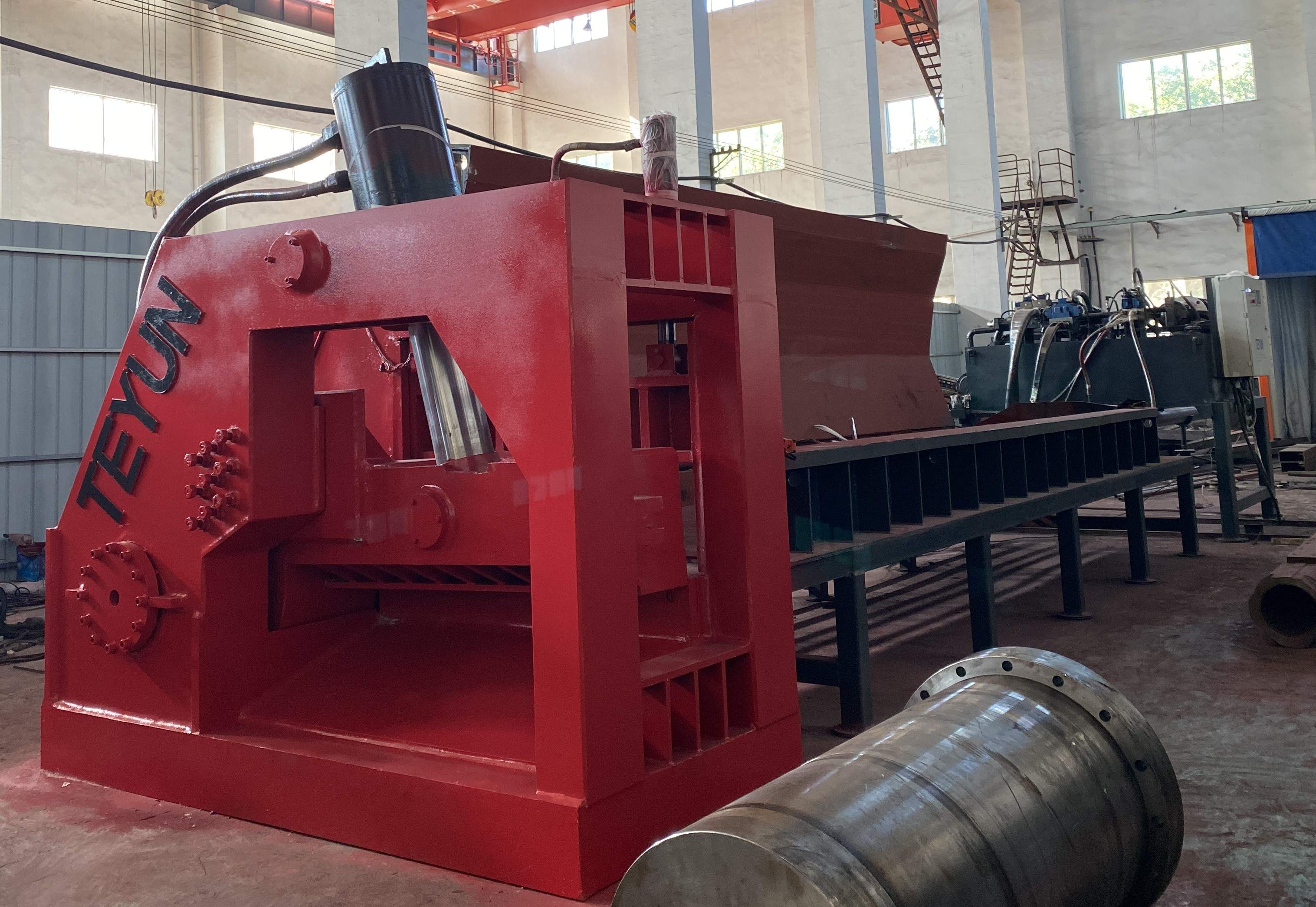

 français
 русский
 español
 العربية
 日本語
日本語 Tiếng Việt
 中文
中文


 Address : Mingjue Industry Park, Lishui District, Nanjing City, Jiangsu Province



 IPv6 network supported